PNW Hike: Catherine Creek
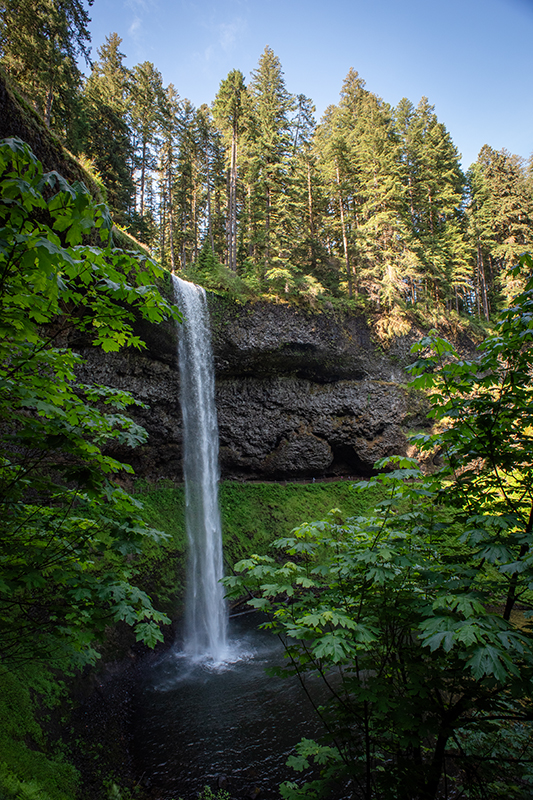
Catherine Creek Recreation Area features several hikes that provide sweeping views of the Columbia River Gorge — and wildflowers.
The Pacific Northwest native wildflower appearing every spring carries thousands of years of ecological and cultural history in its tiny bulb.
BY LAURA J. COLE | May 6, 2026
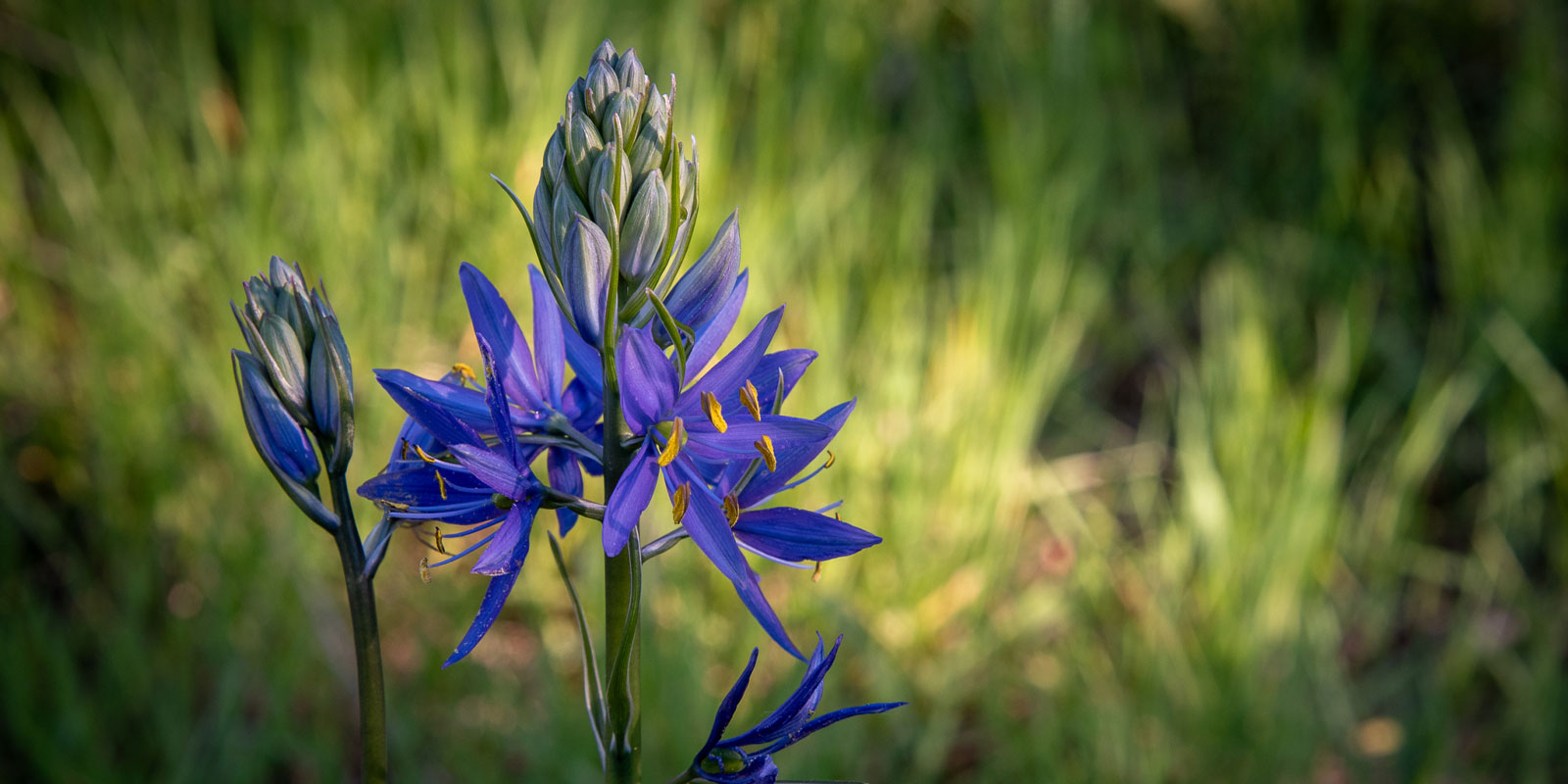
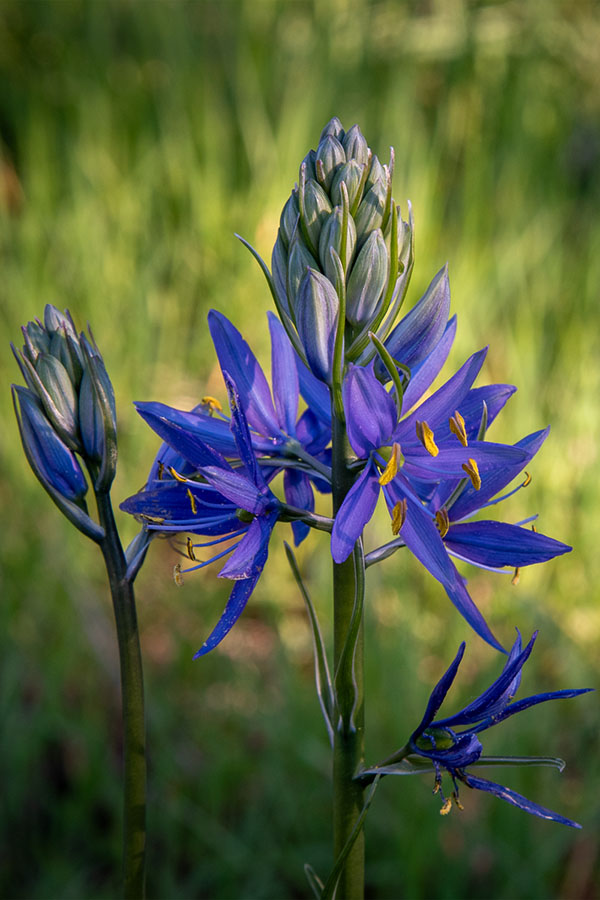
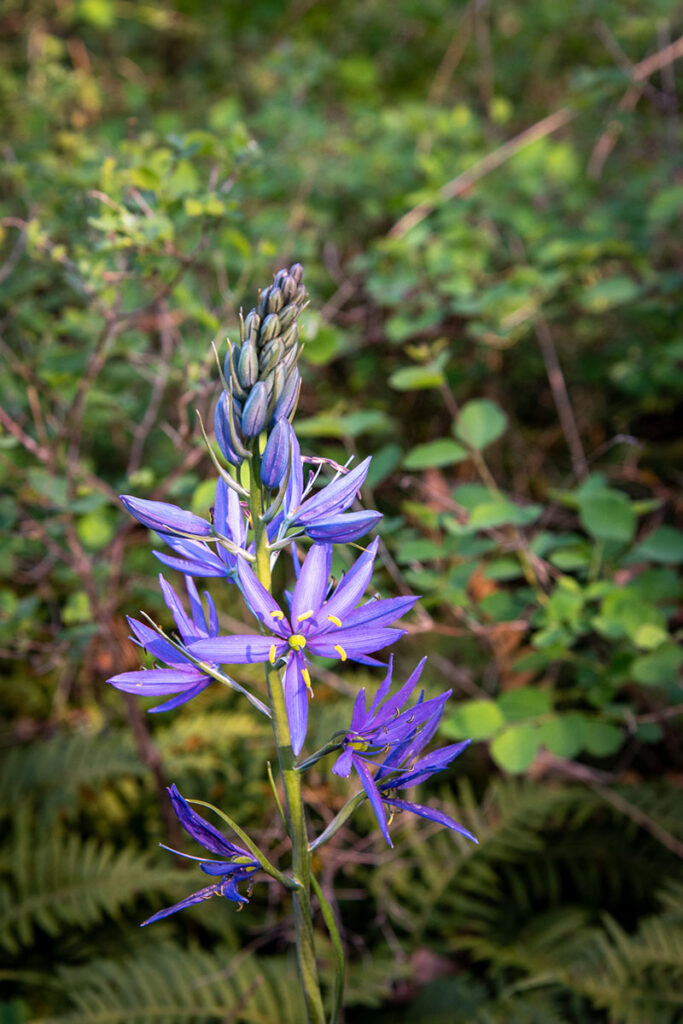
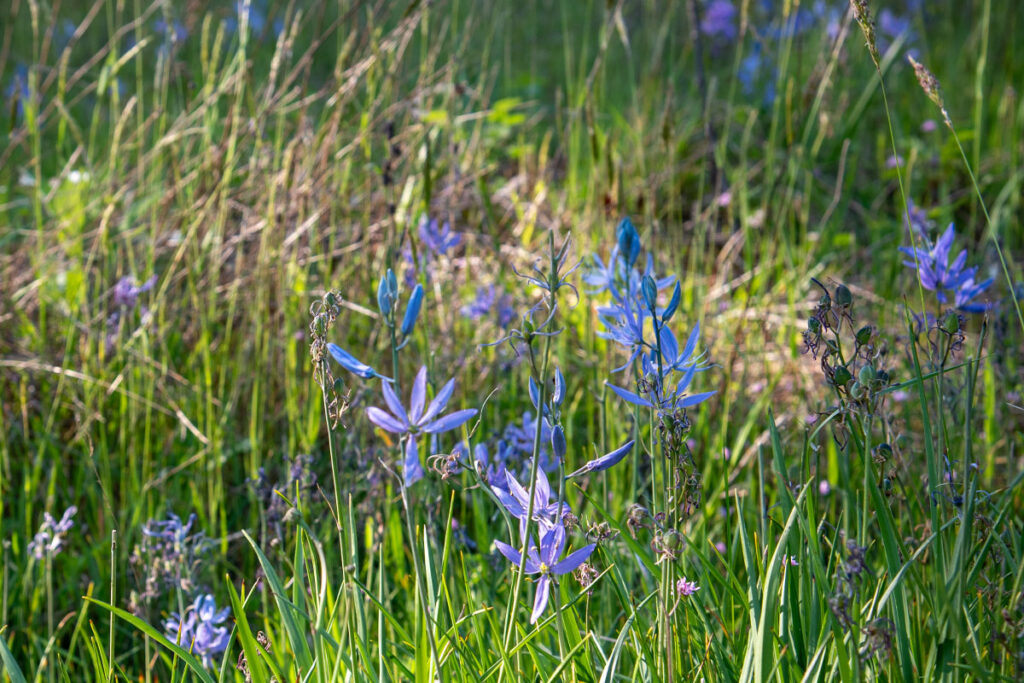
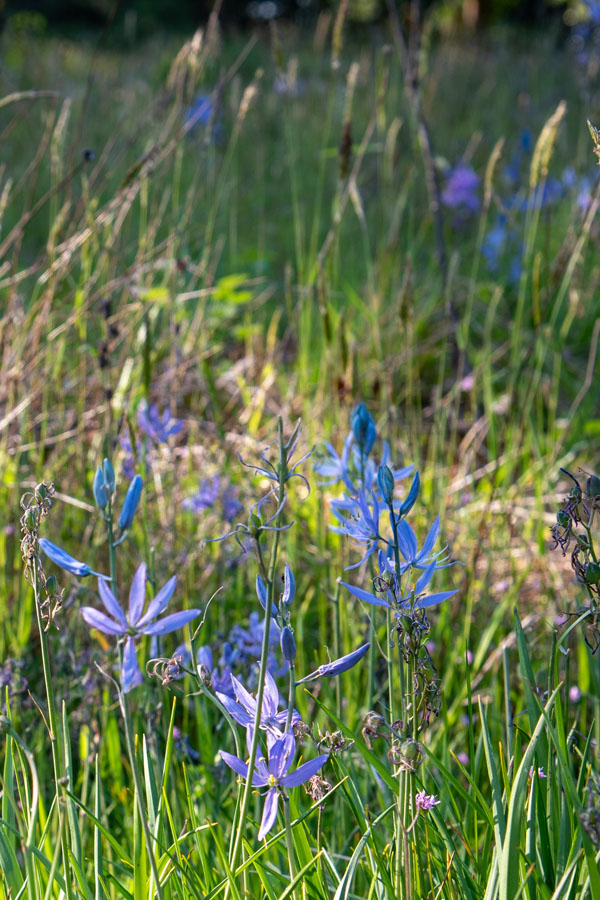
It’s the time of year when the periwinkle-hued petals of camas can be seen popping up everywhere.
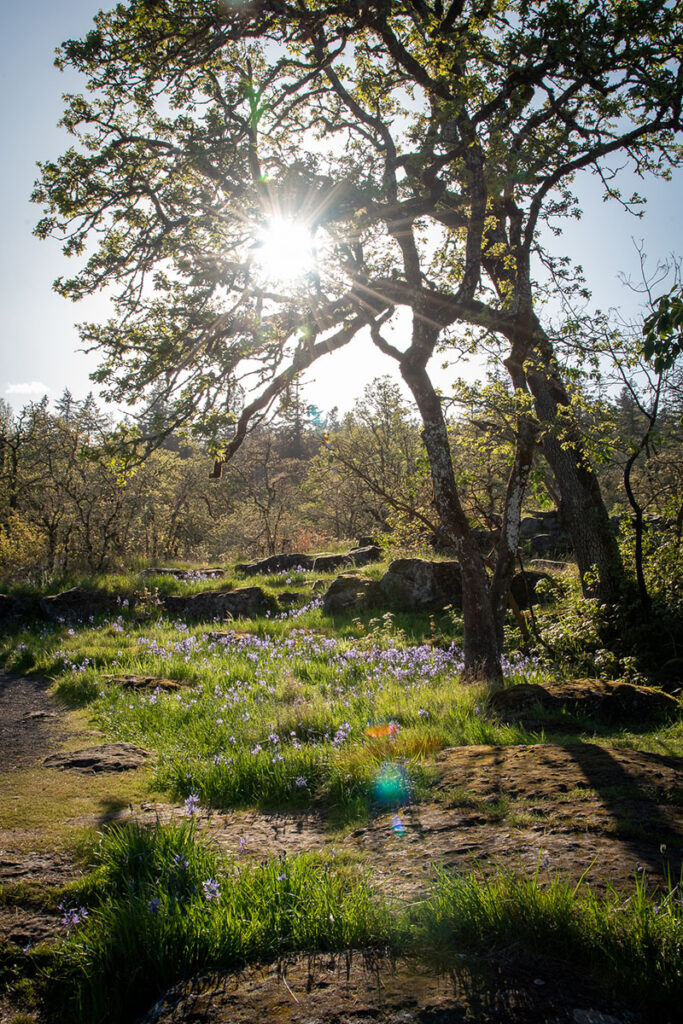
I spot them on my morning dog walks. I stumbled across them a couple of weeks ago while chasing sunsets and whales on San Juan Island. And I walked through fields of them at Lacamas Park, in a town that shares the flower’s name, during a recent hike.
The flowers are so deeply entwined with the culture and ecology of the Pacific Northwest that if there were a single flower equivalent to the Douglas-fir, the Southern Resident killer whales, and the salmon, I’m pretty sure camas would be it. Beyond its role as an icon of the PNW, camas has something to teach us about sustenance, stewardship, and what it means to truly be part of a place.
“If you think about salmon as being a charismatic species that people are very familiar with, camas is kind of the plant equivalent,” said Molly Carney, an assistant professor of anthropology at Oregon State University, when discussing her recent research about the plant. “It is one of those species that really holds up greater ecosystems, a fundamental species which everything is related to.”
It’s no wonder then that the first lesson might be one of value.
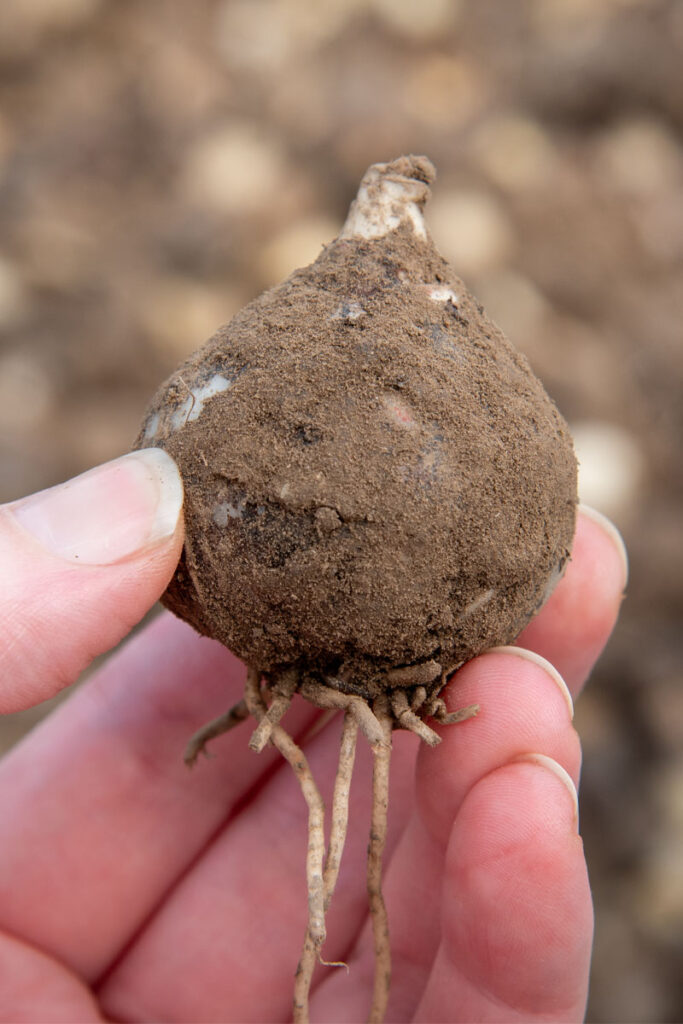
For much of human history in this region, the camas bulb ranked among the most important First Foods in the Pacific Northwest. Only salmon was more widely traded. And for good reason. The tiny bulbs of Camassia quamash, which resemble a small white onion, rival the protein in elk and deer meat. They can be dried and ground into a meal that’s used for pancakes, or mixed with water and shaped into dense, portable bricks with a long shelf life, essential for tribes that traveled vast distances each year. The bulbs also served as a sweetener before sugar, molasses, and honey arrived with European traders. The process of roasting or steaming the bulbs for up to three days converts the plant’s indigestible inulin to fructose, earning it the nickname “Indian candy.”
If in some alternate universe, Europeans had first settled the Pacific Northwest instead of New England, camas might loom as large in the American imagination as corn. Patriotic songs might glorify “lapis waves of tubers” instead of “amber waves of grain.”
WHERE TO SEE FIELDS OF CAMAS FLOWERS NEAR PORTLAND, OR
Camassia Nature Preserve
West Linn, OR
The 0.6-mile Camassia Preserve Loop Trail is on 27 acres of stunning oak savannah. April through May is usually the best time to see the camas in bloom.
Lacamas Park
Camas, WA
To access the 0.7-mile Lily Field Loop trail, take the Round Lake trail. It’s best to either park in the lot on NE Everett St or the one near the boat launch on NE 35th Ave.
Canemah Bluff Nature Park
Oregon City, OR
The 0.2-mile Camas Springs Trail offers the best bet for seeing fields of the camas in bloom—and a beautiful view of the Willamette River.
Camas also illustrates the effect we can have on our environment. When Meriwether Lewis first encountered camas in bloom in 1806, the flowers were vast and dense: “the quamash … resembles lakes of fine clear water, so complete is this deseption that on first sight I could have swoarn it was water.” That was by design. Tribes of the PNW carefully cultivated these fields for the bulb (and to attract other food sources, such as deer), and this effort allowed entire ecosystems to flourish.
During a marine naturalist training program through The Whale Museum, I learned that Coast Salish tribes used controlled burns on the islands to ensure their camas would grow, returning each year to harvest the bulbs. This practice on the mainland is also believed to be what kept the Willamette Valley open and fertile. When I helped harvest camas bulbs with the Greenbelt Land Trust last October, volunteer manager Jean Fleming explained that without those fires, the Valley would have been taken over by Douglas-firs, which shade out the more fire-resistant oak.
Oak savannahs and wetlands are among the most ecologically generous landscapes: highly resilient, naturally water-filtering, and rich in wildlife habitat. They also happen to be easier to convert to farmland than dense forest, which made them appealing and vulnerable. When settlers arrived in the 1800s, oak savannah covered nearly 2 million acres in the Willamette Valley alone. Today, fewer than 50,000 acres remain.
If Europeans had first settled the Pacific Northwest instead of New England, camas might loom as large in the American imagination as corn.
That loss happened because of human choices, just as the abundance that preceded it. Carney’s research, published in the journal Holocene, found PNW tribes were deliberate: setting fire to create optimal growing conditions, and selecting bulbs at peak stages rather than simply taking the largest ones. It was, in other words, intentional land management, refined over thousands of years.
“We have these records showing that people were taking active roles in creating landscapes that fit their needs, and that they’ve been doing so for 3,500 years at least, based on these two proxies of camas and fire,” Carney said. “That provides a powerful claim for restoring these practices.”
There’s something quietly radical about seeing camas differently—not just as a pretty wildflower brightening a morning walk, but as a keystone of this region’s ecology, economy, and identity. Their blossoms highlight a landscape that was respected and tended, one shaped by people who understand that caring for a plant and depending on it are not separate acts. The lessons are there in the flowers, the bulb, and the savannahs.
Which makes every periwinkle- (, purple-, and white-) hued petal something worth pausing for. Not just for its beauty, but for the knowledge it carries. As the camas returns each spring, it asks something of us too: How do we nourish land and people and plants? How do we carve out a space for the things we hold sacred, and what does it take for all of us to flourish.
Ethnobotany of Camas
Heart of the Monster
Nez Perce
Before modern humans, a monster in the Kamiah Valley inhaled animals whole. After it had devoured nearly everyone, Coyote volunteered to be swallowed—but brought knives, flint, and a rope tethering him to three mountains. As he was drawn in, he scattered camas bulbs and serviceberries across the fields, knowing future humans would need food. Inside, he built a fire on the monster’s heart and cut it apart, freeing everyone trapped within. The monster died. Where its heart fell became the birthplace of the Nez Perce—now a mound in Nez Perce National Historical Park—and nearby Weippe and Camas prairies remain sacred harvesting grounds for the tribe today.
Grandmother Camas
Klallam
A long time ago, a village was gripped by hunger. The elder and children cried out but there was no game, no plants. One grandmother, unable to bear her grandchildren’s suffering, climbed a nearby hill alone and wept. As she cried, she sank slowly into the earth until she was gone. Her grandchildren searched for her and climbed the hill. At the top, the granddaughter stopped. “Grandma is here. I can feel her.” They dug and dug and found camas bulbs. Grandmother had given herself so her people would not starve. They have gathered camas ever since.

Catherine Creek Recreation Area features several hikes that provide sweeping views of the Columbia River Gorge — and wildflowers.

At Cape Disappointment near the mouth of the Columbia River, Maya Lin’s walkway and boardwalk present juxtaposing journeys of discovery.