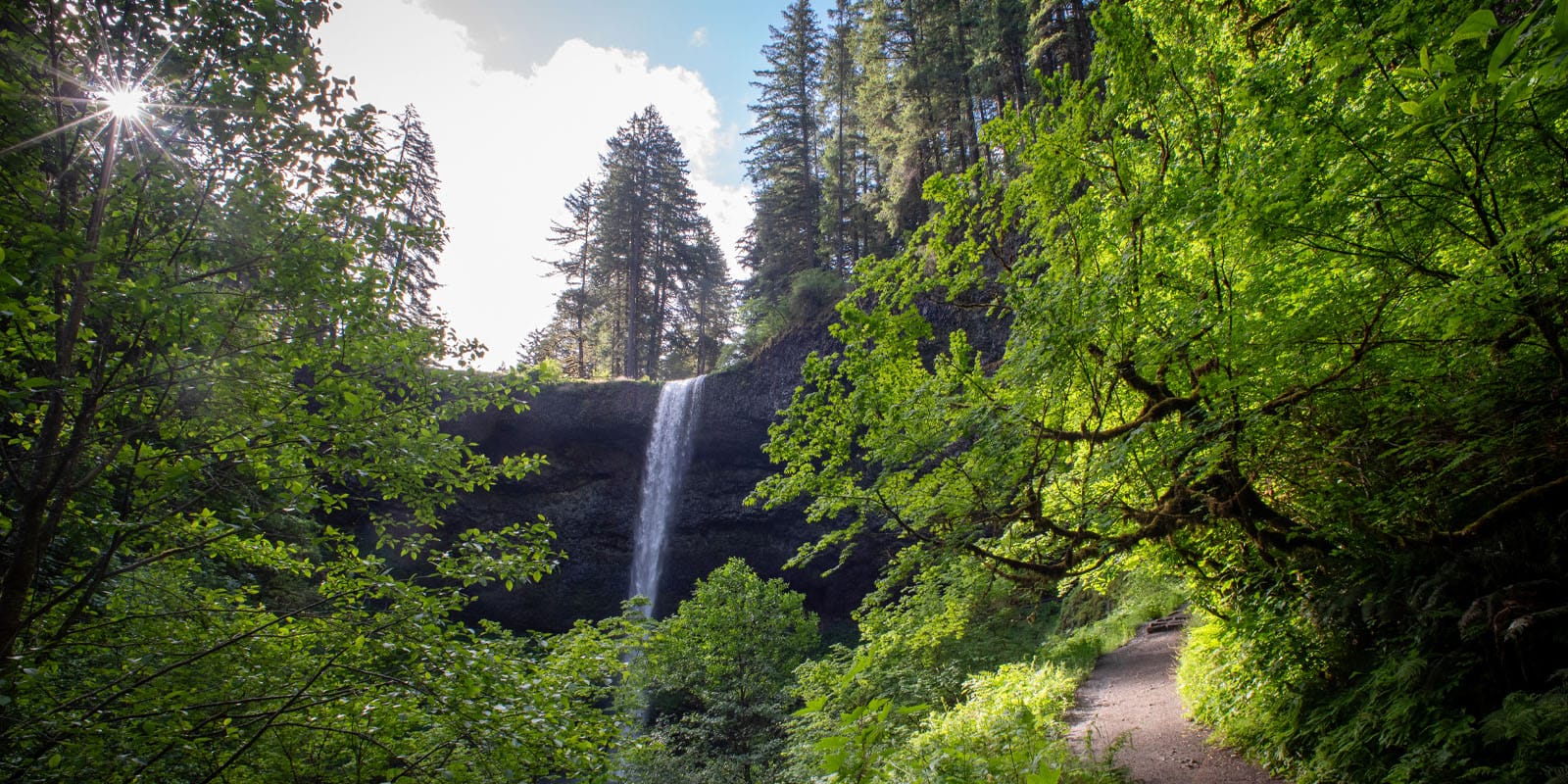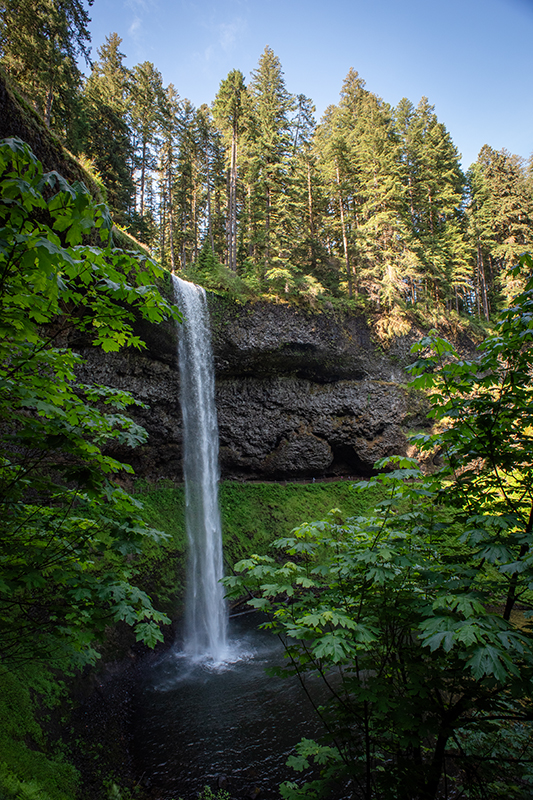
A waterfall cascading over rocks is in the background and a trail lit by sunlight is to the right.
A tall waterfall cascades over rocks to a pool below.

Best PNW Hikes: Trail of Ten Falls

Silver Falls State Park boasts a popular 7.2-mile loop trail past 10 waterfalls, behind four, and through a lush forested canyon.


BY LAURA J. COLE  |  June 4, 2026

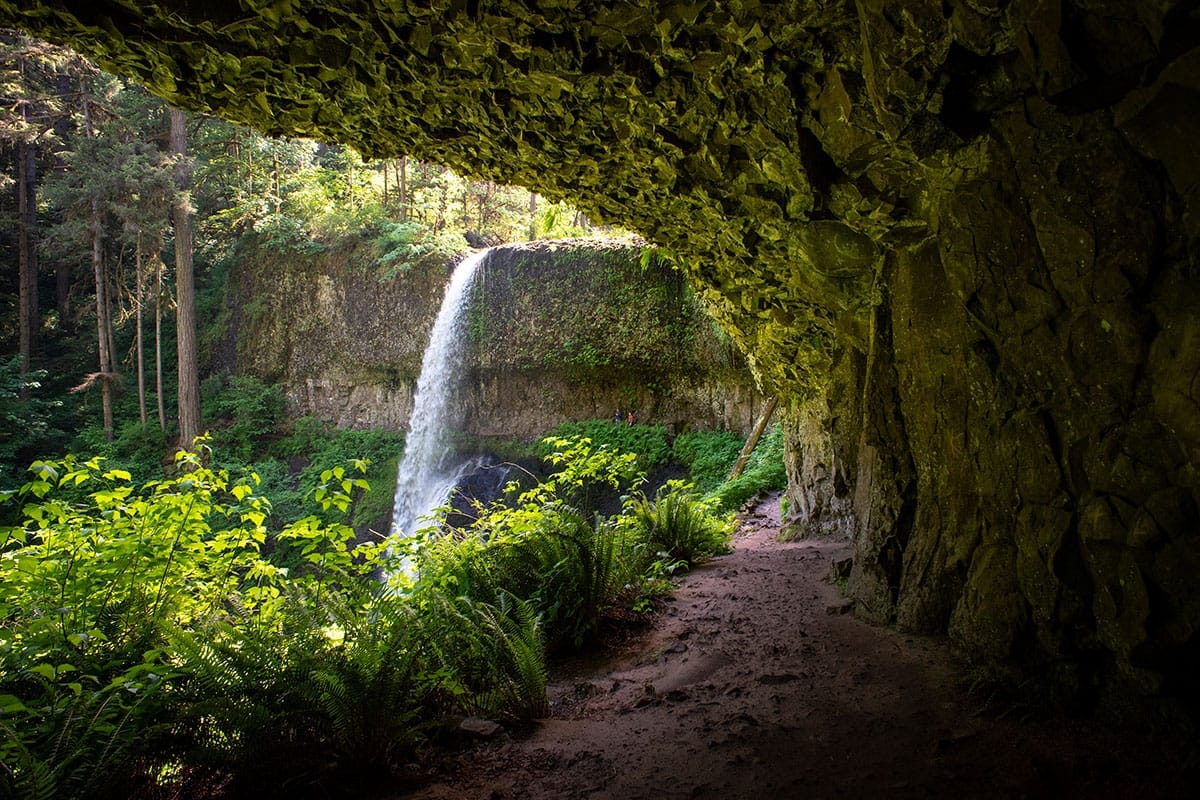
Middle North Falls is considered one of the most majestic waterfalls in the park, largely because of the grotto, caused by centuries of erosion, that allows you to walk behind it.

Things to know about hiking the Trail of Ten Falls.

  • At 9,064-acres, Silver Falls State Park is the largest state park in Oregon. It was established as a result of the work of photographer June Drake, who is responsible for cutting the first visitor trails in the area and tenaciously petitioned the National Park System in the early 1900s to protect the area before more damage could be caused by logging, farming, and fires. The NPS rejected his proposals twice, but it was officially dedicated as a state park in July 1933 and one of two Recreational Demonstration Areas on the West Coast in 1935.
  • Designated a National Recreation Trail, the Trail of Ten Falls was constructed by the Civilian Conservation Corps between 1932 and 1942. The voluntary public work relief program provided single men between the ages of 18 and 25 meals, lodging, and $30 a month ($25 of which was sent to their families) during the Great Depression, in exchange for improving America’s public lands, forests, and parks.
  • Nearly half of the funding for Oregon state parks comes from lottery revenues.
  • Parking is $10 for Oregon residents/$12 for non-residents per day. Daily permits can be purchased through self-pay kiosks, or are covered as part of the Annual Oregon State Park Pass ($60 for Oregon residents/$75 for non-residents). The park can get busy on weekends, so it’s best to arrive early or later in the day.
  • Cell reception is limited to nonexistent on the trail, so be sure to download any maps ahead of time, take a picture of the map near the parking lot, or pick up a free printed one at the Nature Store.
  • Free public bathrooms are available at the trailheads. There are no restrooms or trash cans on any of the trails.
  • Dogs are allowed in the park, but not on any of the trails that are part of the Trail of Ten Falls.

Trail of Ten Falls

Location: Sublimity, Oregon (about 1.5 hours from Portland)

Length: 7.2 miles

Elevation gain: 1,300 feet

Trail type: Loop

Dog friendly: No

Best time for waterfalls: Most of the waterfalls are visible year-round, but are best in April and May when the falls are at their peak.

Land Acknowledgement: This trail is on land that was used by the Confederated Tribes of Grand Ronde.

Trail of Ten Falls

Location: Sublimity, Oregon (about 1.5 hours from Portland)

Length: 7.2 miles

Elevation gain: 1,300 feet

Trail type: Loop

Dog friendly: No

Best time for waterfalls: Most of the waterfalls are visible year-round, but are best in April and May when the falls are at their peak.

Land Acknowledgement: This trail is on land that was used by the Confederated Tribes of Grand Ronde.

The farthest waterfall from any trailhead on the Trail of Ten Falls, Lower North Falls was nicknamed “The Thunderdome” because of the dome-shaped basalt the 30-foot fall rumbles down.

Things to know about hiking the Trail of Ten Falls.

  • At 9,064-acres, Silver Falls State Park is the largest state park in Oregon. It was established as a result of the work of photographer June Drake, who is responsible for cutting the first visitor trails in the area and tenaciously petitioned the National Park System in the early 1900s to protect the area before more damage could be caused by logging, farming, and fires. The NPS rejected his proposals twice, but it was officially dedicated as a state park in July 1933 and one of two Recreational Demonstration Areas on the West Coast in 1935.
  • Designated a National Recreation Trail, the Trail of Ten Falls was constructed by the Civilian Conservation Corps between 1932 and 1942. The voluntary public work relief program provided single men between the ages of 18 and 25 meals, lodging, and $30 a month ($25 of which was sent to their families) during the Great Depression, in exchange for improving America’s public lands, forests, and parks.
  • Nearly half of the funding for Oregon state parks comes from lottery revenues.
  • Parking is $10 for Oregon residents/$12 for non-residents per day. Daily permits can be purchased through self-pay kiosks, or are covered as part of the Annual Oregon State Park Pass ($60 for Oregon residents/$75 for non-residents). The park can get busy on weekends, so it’s best to arrive early or later in the day.
  • Cell reception is limited to nonexistent on the trail, so be sure to download any maps ahead of time, take a picture of the map near the parking lot, or pick up a free printed one at the Nature Store.
  • Free public bathrooms are available at the trailheads. There are no restrooms or trash cans on any of the trails.
  • Dogs are allowed in the park, but not on any of the trails that are part of the Trail of Ten Falls.
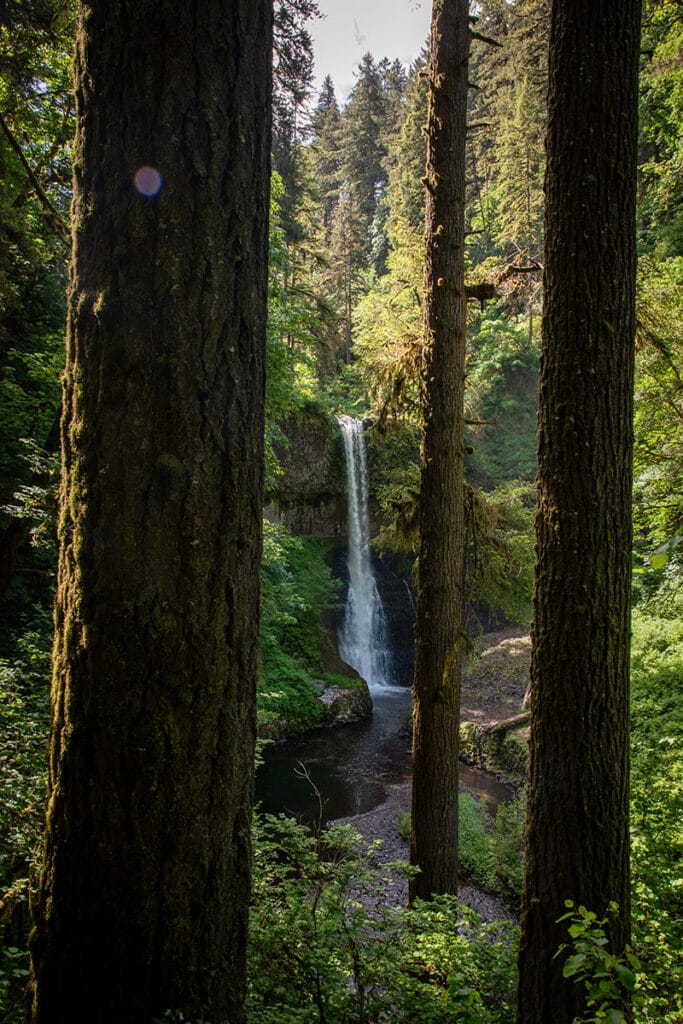
A waterfall is seen through a stand of talls trees
One of four falls in the park you can walk behind, Middle North Falls cascades roughly 100 feet into a large basin.
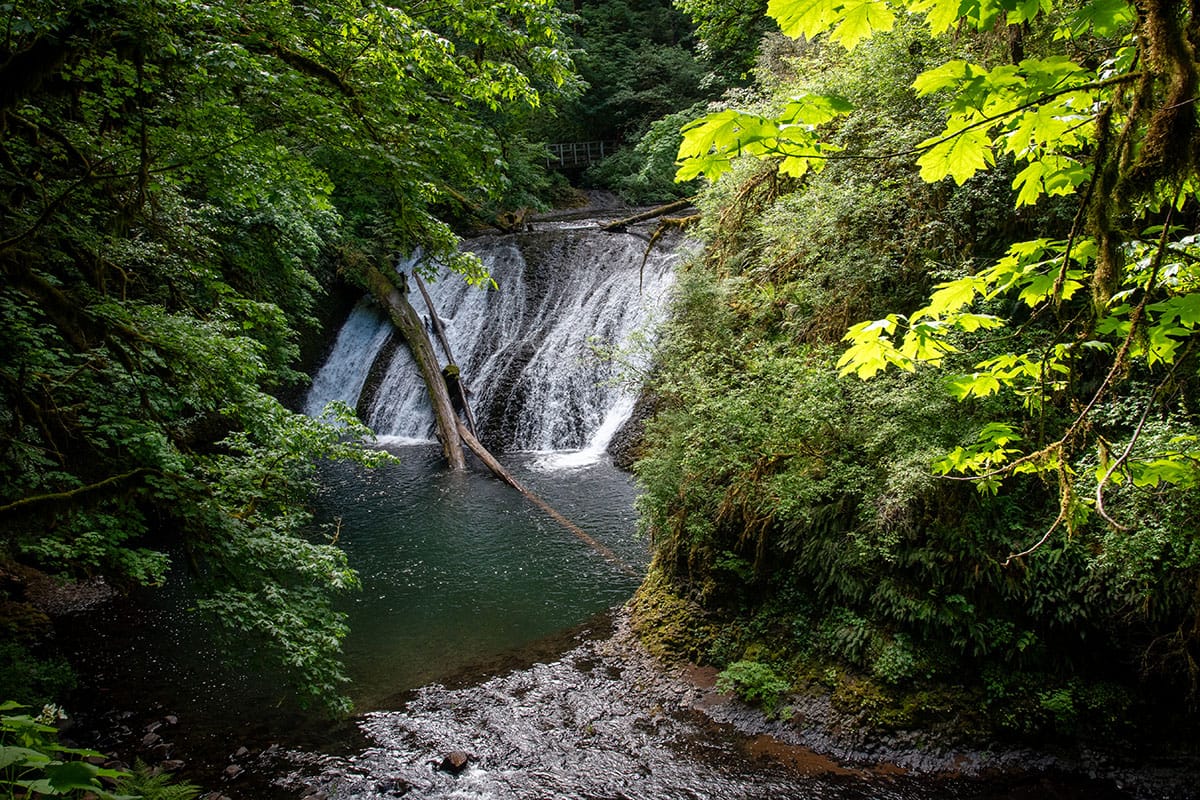
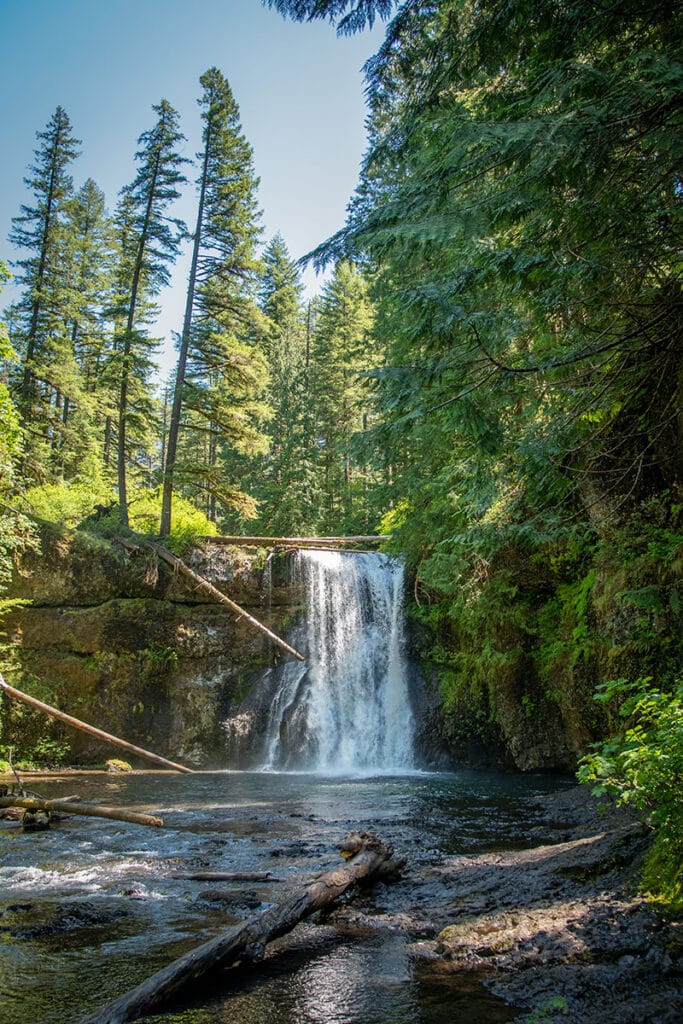
A short, wide waterfall spills into a pool filled with fallen logs
Featuring a broad curtain-style plunging fall, Upper North Falls drops 65 feet over basalt bedrock.
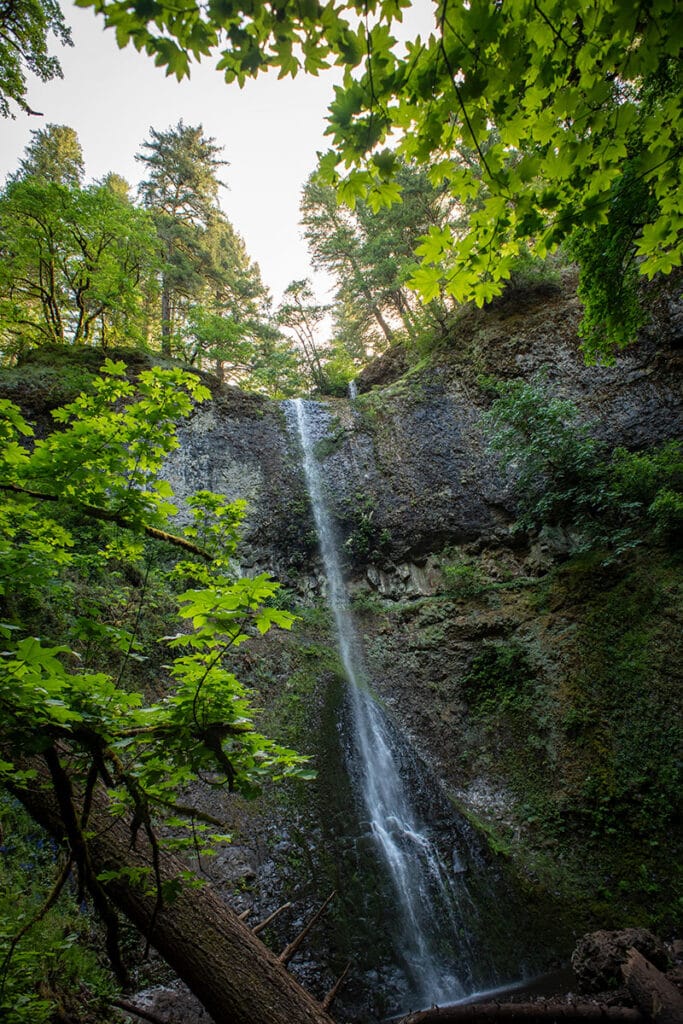
A long, skinny waterfall drapes down a rock wall.
Named for its two tiers, Double Falls is the tallest waterfall in the park at 178 feet, and is a roughly .1-mile hike off the Canyon Trail.
Middle North Falls is considered one of the most majestic waterfalls in the park, largely because of the grotto, caused by centuries of erosion, that allows you to walk behind it.
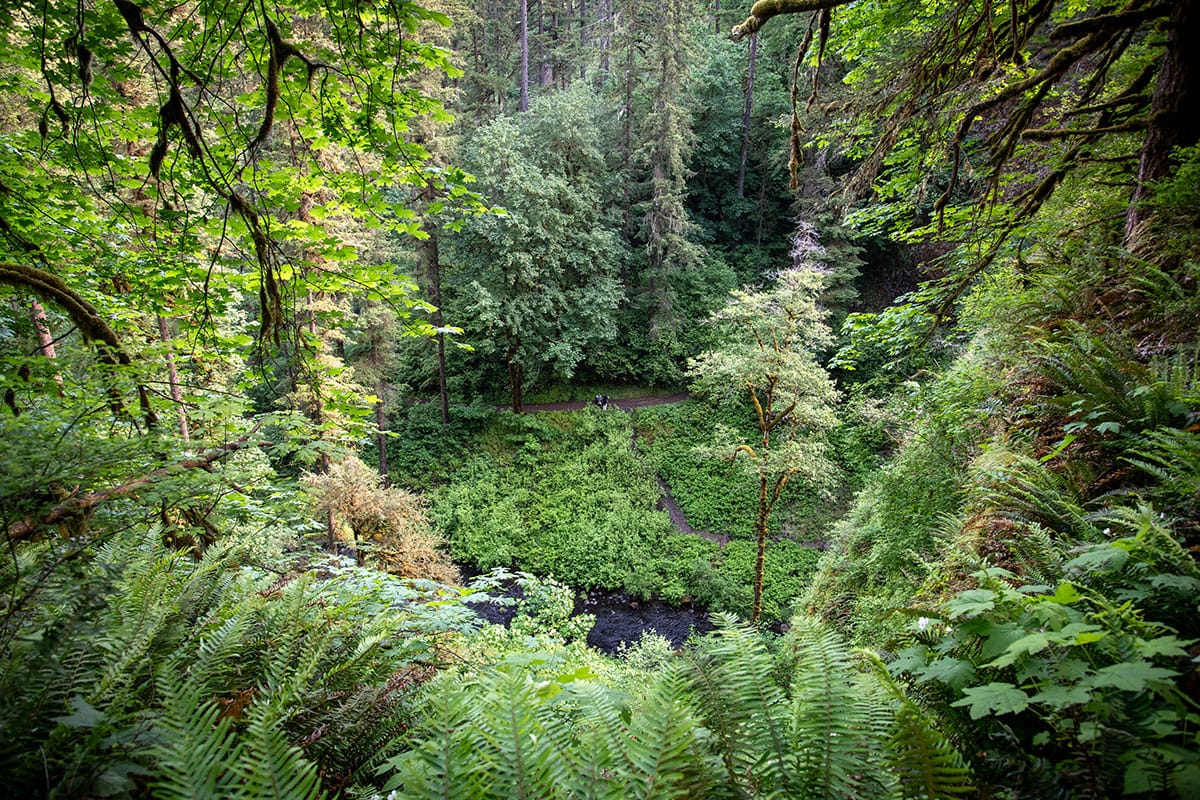
If you're looking for a shorter hike, Maple Ridge Trail (seen here from Canyon Trail) is a 2.6-mile loop that takes you past South and Lower South Falls.
The farthest waterfall from any trailhead on the Trail of Ten Falls, Lower North Falls was nicknamed “The Thunderdome” because of the dome-shaped basalt the 30-foot fall rumbles down.
TOPICS
SHARE THIS STORY
Further Reading