What the Camas Flower Teaches
The understory forest dweller and popular PNW native has inspired many tales—tall and otherwise.
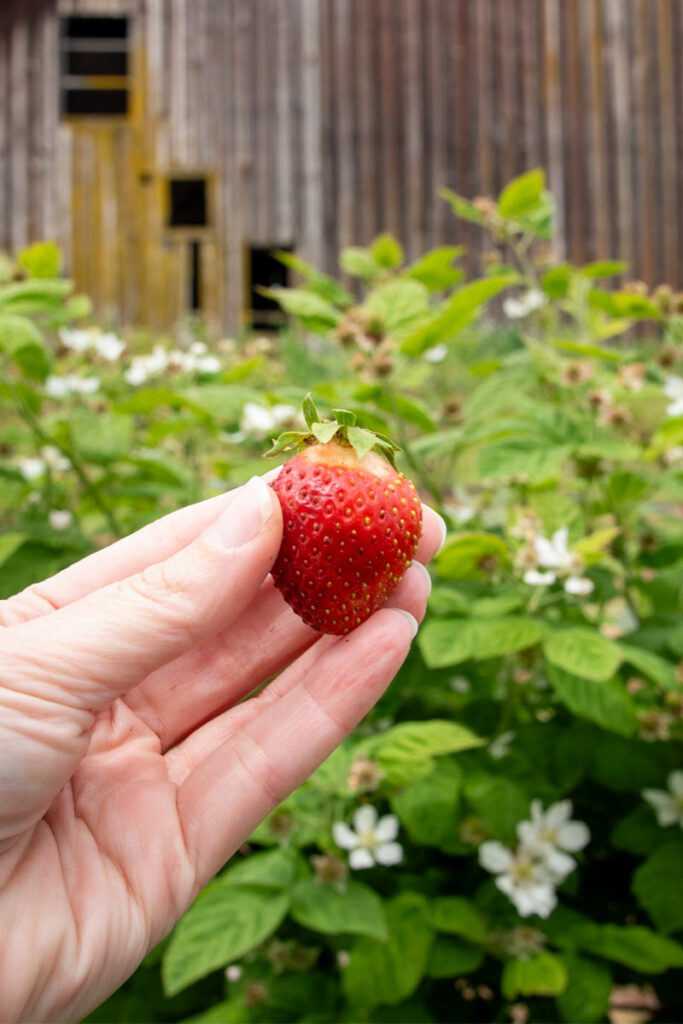
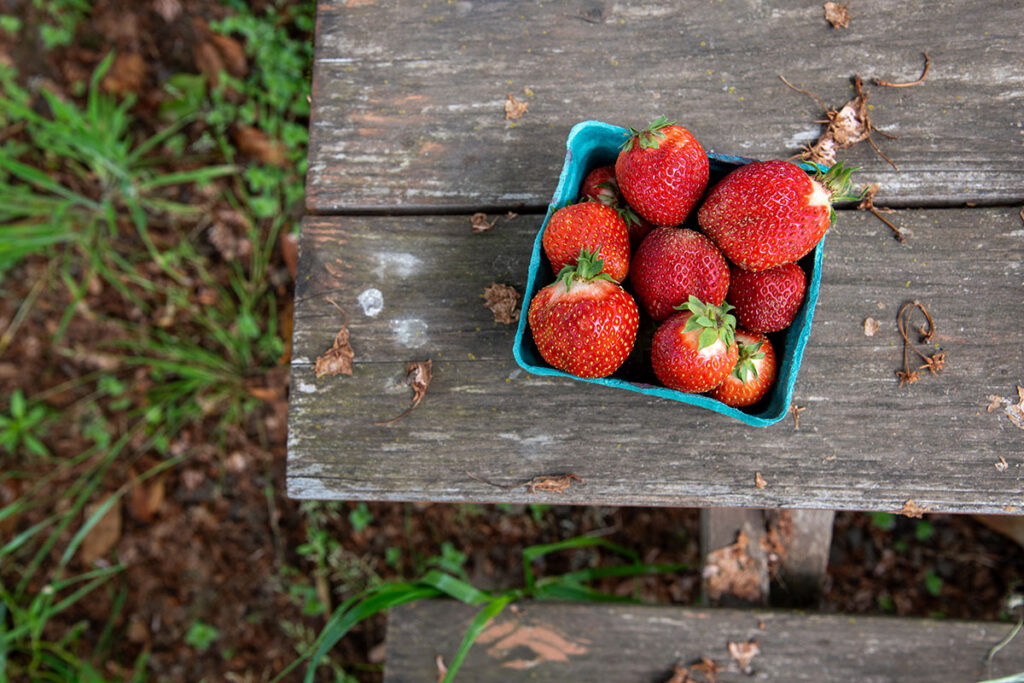
Hood strawberry season has officially begun. Here’s what to know about how they came to be—and where to find them around Portland.
BY LAURA J. COLE | May 20, 2026
This is a story about Hood strawberries, the most popular (and ephemeral) of Oregon strawberries, and a story about a man named George Waldo, the lesser-known pioneering pomologist behind them.
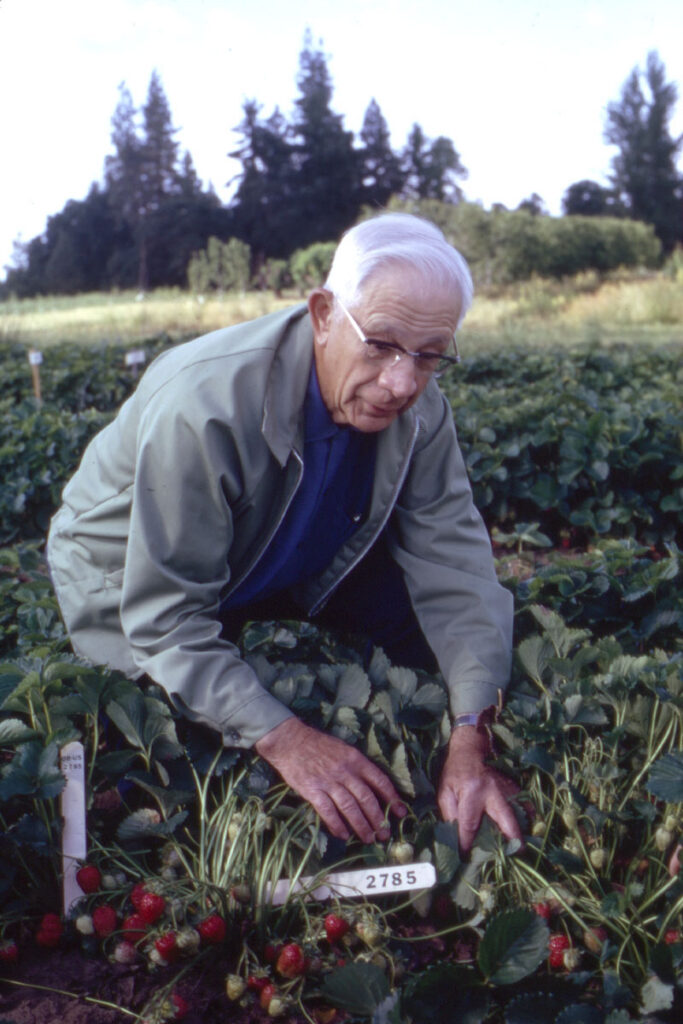
George Waldo worked as a berry breeder for the USDA, first in Maryland and then in Corvallis, Oregon, in the mid-20th century. But way before then, either due to a good sense of humor or a lack of imagination, his parents moved Waldo, age 14, and the family 1,500 miles from Drayton, North Dakota, to a town with just one letter difference: Dayton, Oregon. There, he planted the first strawberries in the family’s small farm, and perhaps that’s when his lifelong love of the popular fruit began. It certainly grew from there. After focusing his graduate thesis on everbearing strawberries, Waldo launched a successful career working with them. He then quietly retired to Marysville, Washington, then known as “Strawberry City” for the large number of farms dedicated to the fruit (and home to the Marysville Strawberry Festival). A 2016 Capital Press article about his legacy stated:
“George Waldo developed two iconic varieties—Marion blackberries and Hood strawberries—that established Oregon as a premier berry state, today ranking first nationally in blackberry production, third in raspberries and strawberries and fourth in blueberries and cranberries.”
Beyond his work, not much has been written about Waldo. He graduated from Oregon State University and Michigan State University. He was reserved, devoutly religious, a stout teetotaler, and had a wry sense of humor. And according to his associate-turned-successor Francis J. Lawrence, he “knew no boundaries as what could be put together.”
It was in this quality that he excelled, and where the story of the Hood strawberry begins.
The year was 1925, and across the strawberry fields of Oregon, Washington, and California, growers noticed the first traces of a disease that would impact their industry. It wasn’t catastrophic—not at first. It was only noticeable in the leaves, which grew yellow spots and began to crinkle. The plants didn’t die, but year after year, they produced fewer and fewer strawberries. Transferred by aphids, the disease became known as the strawberry crinkle virus, or SCV.
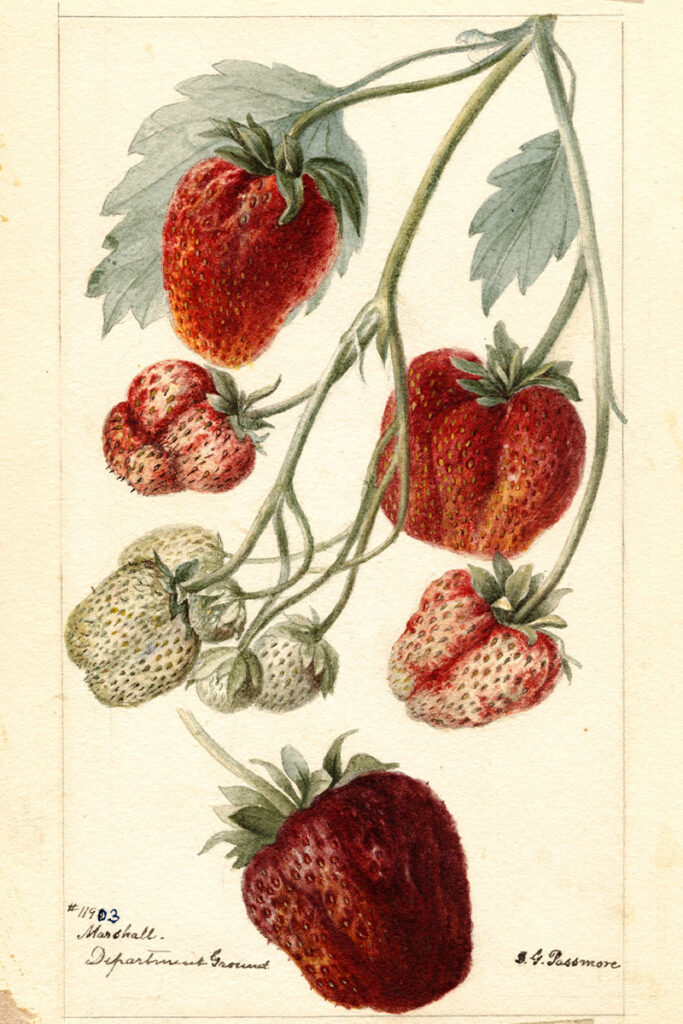
The Marshall variety, which was the standard of flavor in the Pacific Northwest for over 50 years, was particularly susceptible. Within a decade of noticing SCV, growers found that Marshall plants with the disease produced less than half the fruit of healthy ones, accounting for an annual loss of $298,720 in Oregon alone, the equivalent of roughly $7.7 million today.
WHERE TO FIND HOOD STRAWBERRIES NEAR PORTLAND
Bella Organic
Sauvie Island
Columbia Farms U-Pick
Sauvie Island
Hartnell Farms
Clackamas
Hoffman Farms Store
Beaverton
Jeff and Jen’s U-Pick
Dayton
New Seasons
Various Locations
Unger Farms
Cornelius
By 1932, the race was on to develop varieties more resilient and less susceptible to SCV and other diseases, and Waldo was on the case. Working from Oregon’s Agricultural Experiment Station in Corvallis, he was part of a team focused on a new project for the improvement of strawberries. During his nearly 40-year career with the USDA, he engineered a handful of new varieties, including the Suwanee, Brightmore, Midland, Siletz, and Mollala.
Now, if you’ve never given a lot of thought to plant parentage (and unless you’re a horticulturalist, why would you?), there’s a whole lotta swinging and inbreeding going on. Pomologists, or scientists who specialize in the breeding of fruits and nuts, are mad matchmakers, of a sort. In that role, Waldo introduced Howard 17 to Missionary (to create Suwanee) and to Redheart (to create Midland). He paired Blackmore with US-Oreg. 154 (to create Brightmore) and set the stage for US-Oreg. 2012 and US-Oreg. 1816 to produce Siletz. Though both Brightmore and Siletz are descendants of Marshall, neither proved to be its true successor. That title came in 1955, when Waldo first crossed US-Oreg. 2315 with Puget Beauty.
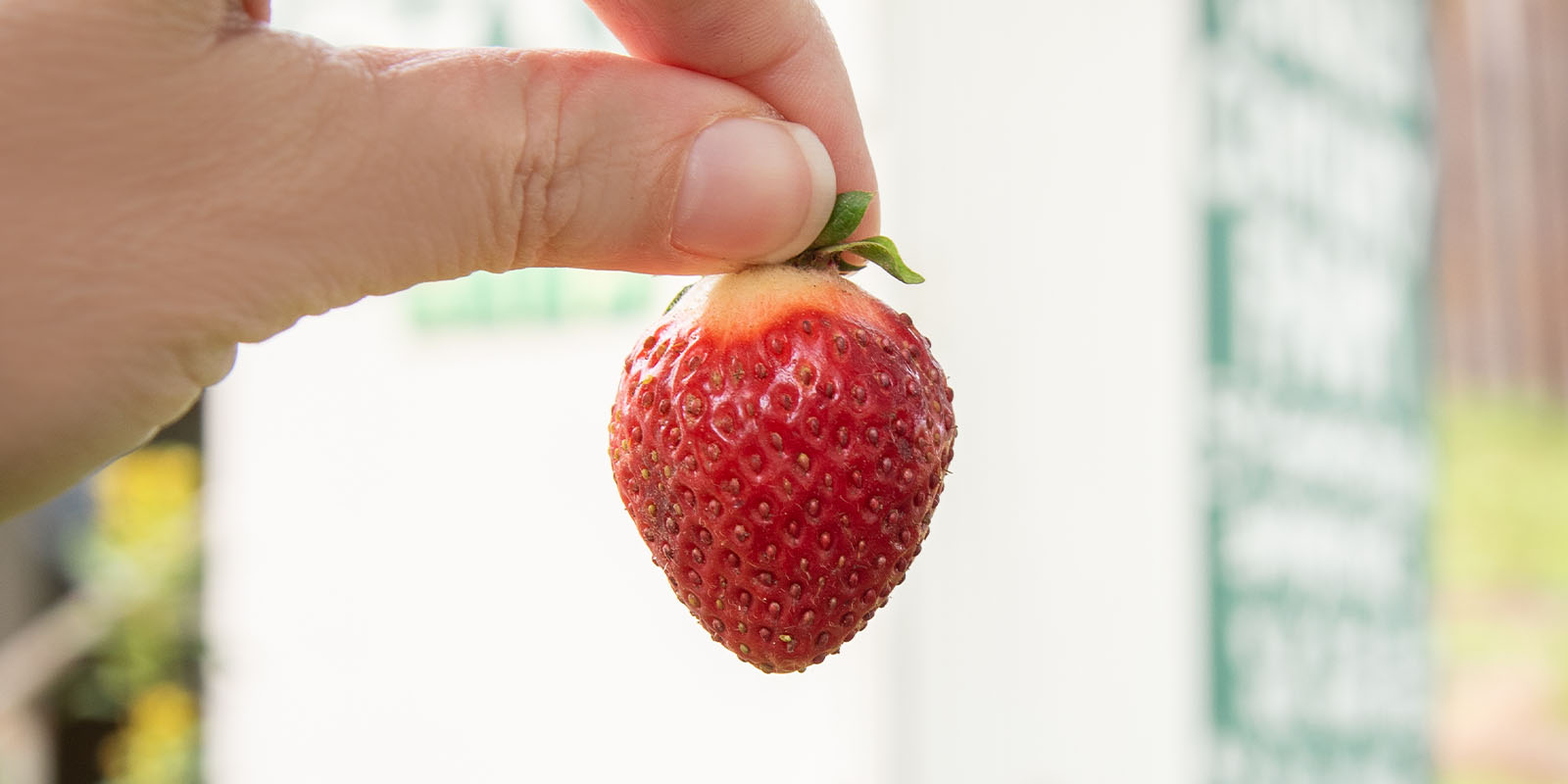
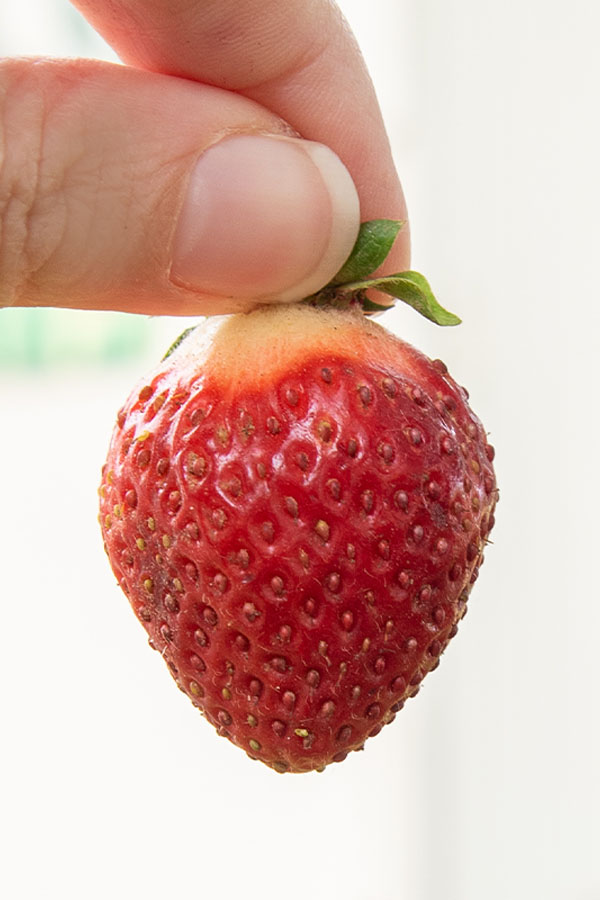
After several years of testing, Waldo formally introduced Hood, writing in the release that preserves and jams made from Hood berries were “equal or superior to those made from Marshall” and that he expected it to take Marshall’s place as the industry leader. Known for their short window of availability (typically 2 to 3 weeks), deep red color, and sought-after sweetness, Hood strawberries are known as “the gold standard in sweet, juicy flavor among Oregon strawberry lovers,” according to the Oregon Strawberry Commission.
Hoods hold the title of Oregon’s most famous and arguably best-tasting strawberry, but outside of Oregon, they’re rare to find fresh as they don’t ship well or have a long shelf life.
Waldo’s prediction was partially right. Hoods do hold the title of Oregon’s most famous and arguably best-tasting strawberry, and they do appear in jams, though typically only from small-scale, artisanal brands. Other varieties, such as Tillamook, Shuksan, and Totem are more popular for commercial preserves. But Hoods have found another calling: ice cream. In a 2010 New York Times article in search of the best strawberry ice cream, a spokeswoman from Häagen-Dazs, one of the top performers among tasters, confirmed they used the Oregon darling:
“We still use the same Hoods and Totems that Reuben [Mattus] picked out,” said Mara Lowry … . “They are not widely grown and don’t travel well. … In fact, they don’t do anything well except make ice cream.”
The Oregonians who clamor to get them, including this one, would disagree with that last part. Nearly half a century after Hoods’ formal introduction to the world, fellow USDA berry breeder Chad Finn put it plainly: “To have a berry as high-yielding as Tillamook but have the taste of Hood—that would be the perfect thing in my world.”
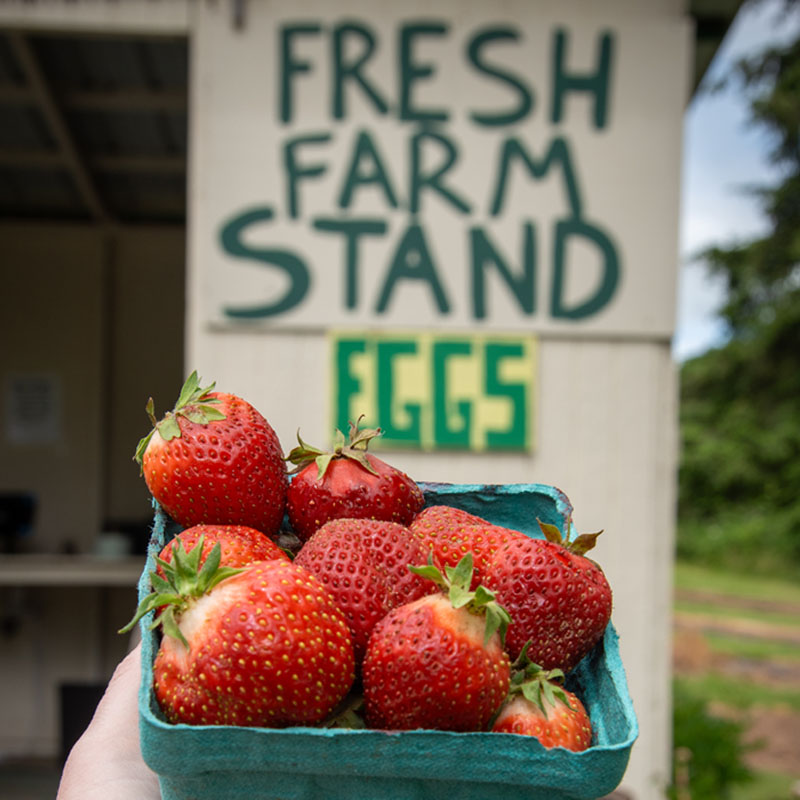
George Waldo never got famous (and likely didn’t want to). But he got something rarer: a berry with staying power. Every late May and early June, when Oregonians line up at farm stands and u-pick fields for a few fleeting weeks, they’re tasting the work of a quiet, devout scientist who believed you could always combine two things and make something better.
Try them in Strawberries Carcassonne
A Dish from Southern France
In a large bowl add:
12-15 Strawberries, washed and halved
Sugar, to taste
Black pepper, coarsely ground (15 grinds)
1/2 cup of armagnac or cognac
Lemon juice, one squeeze
Gently stir the mixture being careful not to bruise or break the berries. Cover and refrigerate until ready to serve.
Portland-raised food critic James Beard says: “Try this remarkably different approach to ripe strawberries, serve them in individual dishes with a crisp cookie, and I guarantee you’ll agree that the pepper does something devastatingly good to them.”
By 1932, the race was on to develop varieties more resilient and less susceptible to SCV and other diseases, and Waldo was on the case. Working from Oregon’s Agricultural Experiment Station in Corvallis, he was part of a team focused on a new project for the improvement of strawberries. During his nearly 40-year career with the USDA, he engineered a handful of new varieties, including the Suwanee, Brightmore, Midland, Siletz, and Mollala.
Now, if you’ve never given a lot of thought to plant parentage (and unless you’re a horticulturalist, why would you?), there’s a whole lotta swinging and inbreeding going on. Pomologists, or scientists who specialize in the breeding of fruits and nuts, are mad matchmakers, of a sort. In that role, Waldo introduced Howard 17 to Missionary (to create Suwanee) and to Redheart (to create Midland). He paired Blackmore with US-Oreg. 154 (to create Brightmore) and set the stage for US-Oreg. 2012 and US-Oreg. 1816 to produce Siletz. Though both Brightmore and Siletz are descendants of Marshall, neither proved to be its true successor. That title came in 1955, when Waldo first crossed US-Oreg. 2315 with Puget Beauty.
After several years of testing, Waldo formally introduced Hood, writing in the release that preserves and jams made from Hood berries were “equal or superior to those made from Marshall” and that he expected it to take Marshall’s place as the industry leader. Known for their short window of availability (typically 2 to 3 weeks), deep red color, and sought-after sweetness, Hood strawberries are known as “the gold standard in sweet, juicy flavor among Oregon strawberry lovers,” according to the Oregon Strawberry Commission.
Hoods hold the title of Oregon’s most famous and arguably best-tasting strawberry, but outside of Oregon, they’re rare to find fresh as they don’t ship well or have a long shelf life.
Waldo’s prediction was partially right. Hoods do hold the title of Oregon’s most famous and arguably best-tasting strawberry, and they do appear in jams, though typically only from small-scale, artisanal brands. Other varieties, such as Tillamook, Shuksan, and Totem are more popular for commercial preserves. But Hoods have found another calling: ice cream. In a 2010 New York Times article in search of the best strawberry ice cream, a spokeswoman from Häagen-Dazs, one of the top performers among tasters, confirmed they used the Oregon darling:
“We still use the same Hoods and Totems that Reuben [Mattus] picked out,” said Mara Lowry … . “They are not widely grown and don’t travel well. … In fact, they don’t do anything well except make ice cream.”
The Oregonians who clamor to get them, including this one, would disagree with that last part. Nearly half a century after Hoods’ formal introduction to the world, fellow USDA berry breeder Chad Finn put it plainly: “To have a berry as high-yielding as Tillamook but have the taste of Hood—that would be the perfect thing in my world.”
George Waldo never got famous (and likely didn’t want to). But he got something rarer: a berry with staying power. Every late May and early June, when Oregonians line up at farm stands and u-pick fields for a few fleeting weeks, they’re tasting the work of a quiet, devout scientist who believed you could always combine two things and make something better.
WHERE TO FIND
HOOD STRAWBERRIES
NEAR PORTLAND
Bella Organic
Sauvie Island
Columbia Farms U-Pick
Sauvie Island
Hartnell Farms
Clackamas
Hoffman Farms Store
Beaverton
Jeff and Jen’s U-Pick
Dayton
New Seasons
Various Locations
Unger Farms
Cornelius

The understory forest dweller and popular PNW native has inspired many tales—tall and otherwise.

Catherine Creek Recreation Area features several hikes that provide sweeping views of the Columbia River Gorge — and wildflowers.